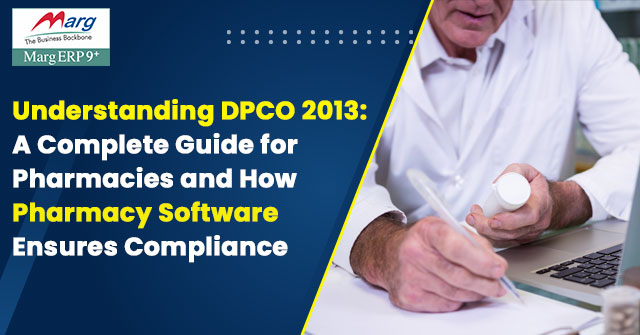
Running a pharmacy in India means managing medicines, customers, suppliers, and government regulations, all at the same time. One of the most important laws that every chemist must follow is the Drugs (Prices Control) Order (DPCO) 2013. This act regulates the pricing of medicines, ensures availability of essential drugs, and protects patients from being overcharged.
But what does this law really mean for day-to-day pharmacy operations? And how can modern tools like pharmacy software, GST billing software, and an efficient inventory management system help chemists stay fully compliant without stress?
This blog breaks down DPCO 2013 in simple words and explains its direct impact on your billing, stock handling, reporting, and overall pharmacy management.
What is DPCO 2013?
DPCO 2013 is a price control order issued under the Essential Commodities Act that regulates the prices of medicines listed under the National List of Essential Medicines (NLEM). These medicines have a government-fixed ceiling price, and no retailer, distributor, or manufacturer is allowed to sell them above this limit.
For non-scheduled medicines (those not listed in NLEM) the act allows a maximum price increase of up to 10% per year. Any price increase beyond this limit is considered overcharging.
DPCO ensures two key things
- Essential medicines remain affordable
- Pharmacies follow transparent and fair billing practices
For a pharmacy, staying compliant is not optional, it is legally required.
Why DPCO Compliance Matters for Pharmacies.
Pharmacies are the final point of sale. That means the burden of correct pricing lies heavily on the chemist. Selling even one essential drug above the ceiling price can result in:
- Repayment of the overcharged amount
- Interest penalties
- Legal actions and government notices
- Loss of licence in extreme cases
This is why chemists across India are relying on the best pharmacy software in India to automate compliance and avoid costly mistakes.
How Pharmacy Billing Software Helps Maintain DPCO Compliance.
- Automatic MRP Validation
A DPCO-compliant pharmacy must never sell a medicine above its printed MRP.
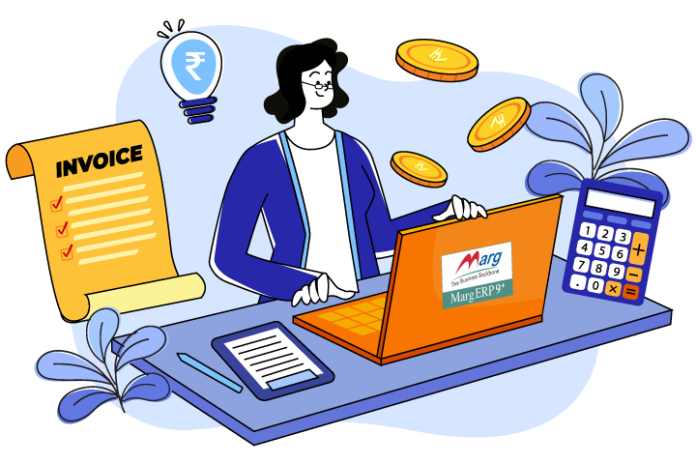
Advanced pharmacy software like Marg ERP automatically prevents billing above MRP, ensuring full compliance without manual checking.
- Updated Price Lists from Manufacturers
Manufacturers regularly update price lists, especially when WPI (Wholesale Price Index) changes or NLEM is revised.
A good GST billing software ensures all new price lists are updated quickly, removing chances of selling outdated batches at incorrect prices.
- Correct Billing for Each Batch
Since ceiling prices apply to specific strengths, formulations, and pack sizes, billing must always pick the correct batch.
The best pharmacy billing software in India automatically selects the right batch and ensures correct pricing, avoiding manual confusion.
Role of an Inventory Management System in DPCO Compliance
DPCO 2013 also requires that essential medicines remain available in the market. Pharmacies must avoid stock-outs, maintain accurate stock records, and manage expiry properly.
An integrated inventory management system like Marg ERP helps by:
- Tracking real-time stock of NLEM drugs
- Sending low-stock alerts
- Identifying expiring medicines
- Preventing the sale of expired or unauthorised batches
- Maintaining purchase and sales registers for audit
ERP to ERP Ordering of Marg ERP is a revolutionary feature for efficient inventory management. Book a demo to know more. This makes it easier for pharmacies to maintain availability and avoid government scrutiny.
Accurate Reporting and Records Made Easy
Under DPCO 2013 (Amendment 2023), pharmacies must maintain clear records of:
- Sales registers
- Purchase bills
- Stock movement
- Batch-wise pricing
- Manufacturer details
Doing this manually is time-consuming and error prone.
This is where the best pharmacy software in India proves its value. It generates audit-ready reports within seconds, helping pharmacies stay prepared for any inspection.
How GST Billing Software Complements DPCO Compliance.
While DPCO handles medicine pricing, GST rules govern tax calculation. Both must work together seamlessly for accurate invoicing.
A robust GST billing software like Marg ERP ensures;
- Correct GST 2.0 applied on MRP-based items
- Automated tax calculation
- Clean, compliant invoices
- Transaction-level transparency
- Accurate financial records for filing returns
This dual compliance (DPCO 2013 and GST) is essential for every modern pharmacy. This is where all-inclusive inventory and billing software like Marg ERP comes into the picture with integrations and auto bank-reconciliation with over 140 banks and major nationalised banks (ICICI Bank, SBI, Axis Bank, J&K Bank, and IndusInd Bank).
How to Choose the Best Pharmacy Software in India to Ensure Compliances?
Following DPCO 2013 and GST regulations are important to run a pharma business in India. You need an efficient pharmacy software for the same and here are the core factors that you should check before buying or subscribing a pharmacy billing software for your business.
When selecting invoicing software, pharmacies should ensure the system includes:
- DPCO-aware billing controls
- Real-time inventory management
- GST-ready invoicing
- Automatic batch selection
- Easy reporting for audits
- Cloud and multi-store compatibility
- Integration with online healthcare services
Such features ensure compliance today and smooth scaling tomorrow.
Conclusion
DPCO 2013 is designed to protect consumers, but it also places responsibility on pharmacies to follow strict pricing and stock regulations. With so many drugs, batches, and price changes to track manually, compliance can quickly become overwhelming.
This is where adopting modern pharmacy software, a reliable GST billing software, and a powerful inventory management system becomes essential. Digitisation not only ensures compliance but also improves accuracy, profitability, and customer service.
For pharmacies aiming to grow while staying compliant, the right software makes all the difference.
Frequently Asked Questions
Is DPCO 2013 mandatory for all pharmacies?
Yes, every pharmacy in India must follow DPCO rules for pricing and selling essential medicines.
Can a pharmacy sell scheduled drugs above MRP?
No. Selling above ceiling price or MRP is a violation and attracts penalties.
How does Pharmacy Software help in DPCO 2013 compliance?
It automates MRP checks, updates price lists, prevents overcharging, and maintains accurate records.
Do non-scheduled drugs have price control?
Yes, their price increase cannot exceed 10% annually.
Why should a pharmacy use GST billing software?
GST billing software like Marg ERP ensures accurate tax calculation, compliant invoices, and smooth financial reporting.